We believe every woman deserves answers from the very start
We built Kinora because we lived through it — the years of searching, the dismissals, the answers that came far too late. We're here to make sure no woman has to go through that again.
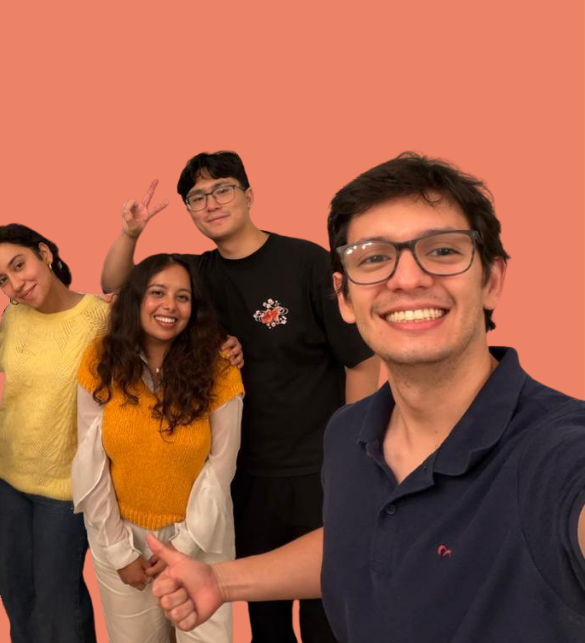
Angelica, Mahi, Martin and Francisco
Co-founders of Kinora, from L to R
Mahi spent years going to doctors, describing her symptoms clearly, and being sent home without answers. When she was finally diagnosed with PCOS, the treatment she received was a series of restrictive diets — guidance that was ultimately more damaging than the condition itself. She was not given a full picture of her health. She was given a workaround and told to get on with it.
Angelica's path to her endometriosis diagnosis took over a decade — not because she lacked the knowledge to advocate for herself, but because the system refused to listen regardless. As a medical student, she understood what her symptoms meant. She could name them, contextualise them, argue for them with clinical precision. She was dismissed anyway. That is not a knowledge problem. That is a systemic one. Today she still lives with severe symptoms that shape what she is able to do each day.
Their stories are not unusual. They are the rule, not the exception. Women are routinely dismissed, under-diagnosed, and given treatment plans built on assumptions rather than data about their individual bodies. The tools haven't changed. The approach hasn't changed. And the cost — in years, in pain, in quality of life — has fallen almost entirely on women.
What took years should take days. That is the standard we are building toward.
Kinora exists to close that gap. We're building Ari, a personal health advocate that gives you real, continuous intelligence about your health — not generic advice, but insight grounded in your own data. And we're building the infrastructure beneath it: a precision medicine layer that accounts for the full complexity of women's health, and a data foundation that will accelerate research and treatment for generations to come.
Our vision is to give every woman the full picture from the very beginning — so she understands what is normal for her, recognises when something is wrong, and has the evidence she needs to be taken seriously. The years that Mahi and Angelica spent searching for answers: we want to reduce that to days. That is our measure of success.
We are building this because we lived it. And we believe no woman should have to live it again.
With belief and purpose,
Mahi, Angelica, Martin & Francisco
Co-founders, Kinora
Meet the team
A group of doctors, bioinformaticians and data scientists determined to change the future of women's health.

Mahima Turakhia
Co-founder
Click to read bio →
Mahima Turakhia
Co-founder
Bioinformatician with Precision Medicine training at UCL and clinical bioinformatics experience at the UCL Cancer Institute, paired with advanced machine-learning training at the University of Oxford. After a 10-year journey to finally receiving a PCOS diagnosis, she is driven to close the gap in personalised women's health and eliminate trial-and-error treatment.
LinkedIn
Dr Angelica Akrami
Co-founder
Click to read bio →
Dr Angelica Akrami
Co-founder
Cambridge Doctor with experience at Vira Health and Milltrust International. As Women in Entrepreneurship Lead with four years at Cambridge University Entrepreneurs, she brings strong entrepreneurial leadership. Her decade-long journey to finally receiving an endometriosis diagnosis drives her commitment to personalised, attentive care for women.
LinkedIn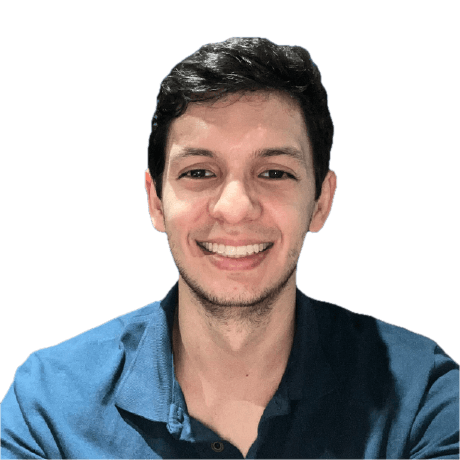
Dr Francisco Ocazionez
Co-founder
Click to read bio →
Dr Francisco Ocazionez
Co-founder
Physician–Data Scientist trained at Imperial with research experience at Johns Hopkins, specialising in explainable AI and population health modelling. He is passionate about applying rigorous data science to reduce diagnostic delay and improve personalised care in women's health.
LinkedIn
Dr Martin Tam
Co-founder
Click to read bio →
Dr Martin Tam
Co-founder
Cambridge Doctor with experience in biotech at Hermes Biosciences and Stanford, clinical research at CRUK / CITIID / CUH, and venture development through Cambridge's Entrepreneur Ecosystem. He is committed to using data and precision medicine to improve recognition and personalised treatment of women's health conditions.
LinkedIn